
I Want a Condo With Strong Rental Demand Later — What Listing Signals Tell You It Will Be Easy to Rent Out

Quick answer: The three strongest rental demand signals in a Singapore condo listing are MRT walking distance under 500 metres, a floor plan with a functional second bedroom that isn't a converted study, and precinct rental vacancy below 4% in URA's most recent data. Combined, these factors predict sub-3-week vacancy periods and sustainable yield — which is what actually matters when your tenant leaves.
Most people buying an investment unit focus on the wrong signals.
They are drawn to the developer's reputation, the showflat finishes, or the view from the upper floors. Those details make the brochure. They do not make the rental income.
What predicts strong rental demand is structural, not cosmetic. Here are the listing signals I examine before recommending an investment unit to a client.
Signal 1: MRT Walking Distance for Strong Rental Demand
The listing will almost always say "near MRT." Near is doing enormous work in that sentence.
I verify MRT walking distance against the actual street-level map, not the developer's illustrated radius. 400 metres as the crow flies can become 600 metres on foot once you account for road crossings and perimeter fencing. That distance matters to a tenant choosing between two comparable units.

The threshold I use: under 500 metres measured on foot. Under 300 metres is premium. Above 700 metres is a rental yield discount, and above 1 kilometre requires a countervailing amenity of unusual strength.
From the current portfolio: Lucerne Grand at Lakeside Drive, Lentor Gardens Residences at Lentor Modern Crescent, and River Modern with direct Great World MRT connection all meet this threshold. The MRT-link argument for each is not approximate — it is measurable.
Signal 2: Functional Bedroom Configuration
This is where listings frequently mislead.
A "2-bedroom" unit that includes a junior bedroom of 66 square feet or a bedroom without a window is not what the expat professional rental market considers a 2-bedroom. The tenant you want — typically an expat couple or a young professional household — is renting based on livability, not unit count.
What I look for in a floor plan:
The second bedroom should accommodate a queen bed, bedside tables, and a wardrobe without requiring furniture compromise. A minimum of approximately 90–100 square feet of clear floor area is the functional threshold. It should have a window — not just to meet BCA code but because natural light is a non-negotiable for most rental tenants who have options.

A "2 + study" configuration where the study has no window and measures 50 square feet is marketed as a 2-bedroom but rents as a 1-bedroom. That is a yield compression that appears on the first tenancy renewal.
Signal 3: Precinct Rental Vacancy Rate
This is the most overlooked signal. It is also the most reliable.
URA's published rental data provides district-level vacancy rates updated quarterly. A precinct with vacancy consistently below 4% indicates structural demand that absorbs new supply without yield dilution. Above 6% suggests you may be entering a market where existing tenants have pricing leverage.
Before buying any investment unit, I pull the vacancy rate for the specific district and sub-zone over the prior eight quarters. That trend tells you whether you are buying into a tightening or loosening rental market — information the developer's marketing team will not volunteer.
Signal 4: Tenant Catchment Within 3 Kilometres
Rental demand is not abstract. It comes from a population of people who need to live somewhere. The question is whether that population is present, growing, and likely to remain so.
I map three categories of tenant catchment before recommending a unit:
Corporate and employment nodes.
Proximity to One-North, Paya Lebar Quarter, Marina Bay Financial Centre, or Jurong Lake District's developing commercial spine generates professional tenant demand. These tenants typically sign 1–2 year leases, pay on time, and maintain units to a standard that preserves condition.
International schools.
Within 3 kilometres of a well-regarded international school (Tanglin Trust, SAS, GESS, UWCSEA campuses) you will find a family rental market that is durable, renewal-oriented, and willing to pay a premium for the proximity that makes school runs manageable. District 10's rental resilience owes much of its durability to this dynamic.

Healthcare and research institutions.
Proximity to NUH, SGH, or Biopolis generates a sustained stream of medical professional and research fellow tenants who arrive with relocation budgets and multi-year assignments.
Signal 5: Facing and Stack — More Important Than Most Buyers Realise
A north-south facing unit in Singapore's equatorial climate runs cooler, requires less air conditioning, and accumulates less solar damage over a tenancy cycle. Tenants feel the difference. So do their utility bills.
A city or reservoir view-facing unit commands a rental premium that, over 5–10 years, compounds materially. At Thomson Reserve, the upper-floor units with unblocked MacRitchie views are structurally different rental products from the lower pool-facing units — a distinction I wrote about in detail in the pre-launch analysis.
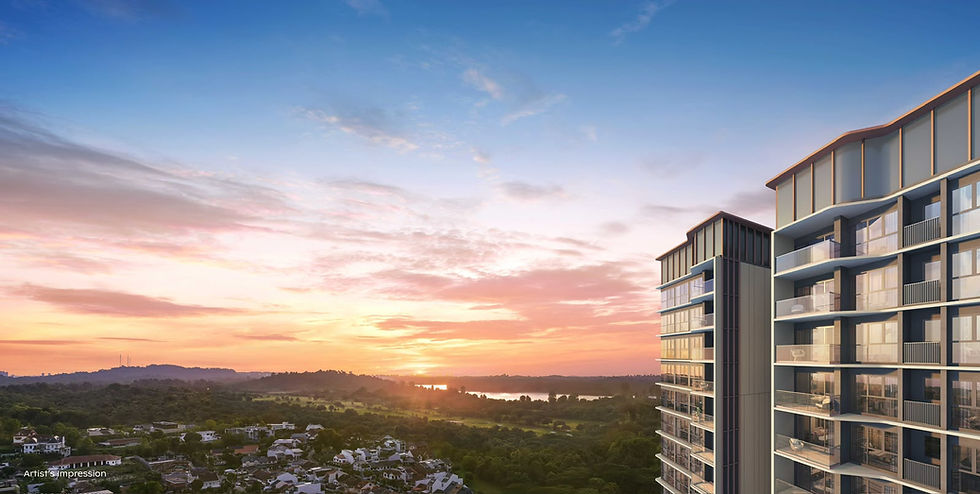
I wrote separately about stack selection and how it drives resale value. The rental implications are identical and front-loaded: you feel the facing and stack differential from the first tenancy, not the resale exit.
Signal 6: Supply Pipeline in the Same Precinct Over 24 Months
The cleanest rental demand story in the world weakens if 2,000 comparable units are completing in the same postal district over the next two years.
Check URA's development pipeline data — it is public. A precinct with limited pipeline completions over the coming 24 months means fewer competing units at the point your property is ready to rent. At Dunearn House, the first non-landed launch in the Swiss Club subzone in 33 years means the pipeline competition argument is structurally minimal.
What This Means in Practice
None of these signals requires inside information. They require 90 minutes of structured research using publicly available URA data, the listing floor plan, and a map.
What they produce is a rental demand conviction — the confidence that when this unit is completed and handed over, the search for a quality tenant will take weeks, not months.
Frequently Asked Questions
What is a realistic gross rental yield for a new launch condo in Singapore in 2026?
Gross rental yields across Singapore new launches currently range from approximately 3.0% to 4.5%, depending on district, unit type, and precinct supply conditions. CCR developments typically yield 2.8–3.5% gross; RCR and OCR with strong MRT proximity and family catchment can achieve 3.5–4.5%. Net yield (after maintenance, property tax, and agent fees) typically runs 0.5–1.0% below gross.
How long does it typically take to find a tenant for a new launch condo in Singapore?
In a well-positioned unit in a precinct with sub-4% vacancy, a quality tenant is typically secured within 3–4 weeks of marketing. Units with unfavourable facing, awkward floor plans, or in precincts with heavy pipeline supply have historically taken 6–10 weeks. This vacancy period represents direct yield dilution — it is a meaningful factor in total return calculation.
Can expats rent a new launch condo that is still under construction?
No. A unit cannot be tenanted until the Temporary Occupation Permit (TOP) is issued. Most new launches in Singapore carry a construction timeline of 3–5 years from purchase to TOP. Buyers should plan for a zero-income period during construction, supported by their cash flow position and first property rental income where applicable.
Should I buy a 1-bedroom or 2-bedroom unit for rental yield?
The 2-bedroom format consistently outperforms on net yield in Singapore's professional tenant market. While 1-bedroom units have lower acquisition cost, they also attract shorter lease terms, higher turnover, and a narrower tenant pool in districts where families and couples dominate demand. The 2-bedroom unit's slightly higher quantum is typically recovered in yield stability within the first two tenancy cycles.
What URA resources can I use to check rental data before buying?
URA's Real Estate Information System (REALIS) provides rental transaction data by development, district, and unit type, updated quarterly. The URA developer sales data and vacancy rates by planning area are also publicly available via the URA website and the data.gov.sg portal. These should be the starting point for any investment unit evaluation — not the developer's indicative yield figures.

